
Views: 0 Author: Site Editor Publish Time: 2026-09-09 Origin: Site


Are your pastures suffering from uneven nutrient distribution? I see this in the field all the time. When manure drops are inconsistent, it causes severe nutrient burn and wastes valuable fertilizer. As an engineer who has spent years troubleshooting these drivetrains, I can tell you that a failing power transmission system often sits at the heart of this costly issue. Silently, it disrupts your entire field management strategy. Let's break down the internal mechanics of these systems, their direct impact on pasture health, and how to make the exact equipment choices needed for your agricultural operation.
Precision Control: The gearbox regulates the speed of the apron chain and beaters, ensuring a consistent flow of material regardless of tractor ground speed.
Pasture Health: Uniform application prevents nutrient pooling, protects delicate grass from smothering, and ensures safer grazing environments for livestock.
Equipment Evolution: Modern hydraulic and PTO-driven gearboxes offer superior torque multiplication compared to older, ground-driven models.
Maintenance is Key: Routine lubrication and mechanical inspection extend component lifespan and prevent costly mid-season downtime.
Scalability: Matching gearbox capacity and gear ratio to your farm's specific acreage and manure type maximizes Return on Investment (ROI).
From an engineering and agronomic standpoint, the agricultural sector is undergoing a massive shift. Stricter environmental regulations regarding phosphorus runoff are forcing operations to abandon outdated “guesswork” spreading. The current trend heavily favors hydraulically integrated precision systems over traditional mechanical ground drives.
Why? Because achieving a mathematically uniform application rate is no longer just about crop yield; it is a matter of ecological compliance. This demand for micro-adjustment capabilities in the field is driving the rapid adoption of advanced hydraulic gearboxes. Farmers now require drivetrains that can instantly adapt to varying manure densities without stalling the tractor or compromising the spread pattern.
The mechanical efficiency of any fertilizer application system relies entirely on its power transmission components. At the core of this system is the gearbox—a highly engineered unit designed to convert raw engine or hydraulic power into precise mechanical action. Without this component, achieving a controlled application rate while dragging heavy loads across muddy spring fields is mechanically impossible. In fact, a high-quality farmyard manure spreader heavily depends on this central hub to distribute weight and power effectively.
Fundamentally, an agricultural gearbox is an enclosed system of gears, shafts, and bearings designed to transmit rotational power from a source to the working mechanisms of an implement. In the context of spreading organic waste, it serves as the central nervous system of power distribution.
Tractors usually supply power at standardized PTO speeds of 540 RPM or 1000 RPM, or via hydraulic remotes. However, the internal mechanisms of a spreader, such as the floor conveyor and the distribution beaters, require entirely different rotational speeds and torque levels to function. The gearbox utilizes specific gear reduction ratios to decrease high rotational input speeds while simultaneously multiplying the torque. This massive torque is essential for moving tons of dense, wet material from the front of the hopper to the rear distribution point without shearing drive pins.
The overall effectiveness of the implement relies on the synchronized operation of two primary systems: the material delivery system (apron chain) and the material distribution system (beaters or spinners). Power enters the gearbox via the input shaft and is divided internally.
One output shaft drives the apron chain, moving the material backward at a slow, deliberate pace. Simultaneously, another output (or a linked secondary gearbox) drives the beaters at a high velocity to shred the material and propel it outward. If the gearbox fails to synchronize these two actions, the machine will quickly jam. It is that simple. When the apron chain feeds material faster than the beaters can shred it, mechanical failure and uneven field application inevitably follow.
The mechanical function of the drivetrain directly impacts agronomic outcomes. The primary goal of spreading organic waste is to return essential nutrients—like nitrogen, phosphorus, and potassium (NPK)—back to the soil in a state that plants can easily absorb. Precision is not a luxury; it is an ecological necessity.
When a spreader lacks precise gearbox control, it tends to drop material in heavy, concentrated clumps rather than a fine, even layer. These concentrated drops create localized zones of extreme nitrogen overload. While nitrogen is vital for grass growth, an excessive concentration causes "nutrient burn," effectively dehydrating and killing the underlying forage.
More importantly, large clumps physically smother the grass. They block sunlight and halt photosynthesis. This creates bare patches in the pasture, which are quickly colonized by invasive weeds. Uneven pasture fertilizer spreading also drastically increases the risk of environmental pollution. Heavy concentrations of manure are much more likely to wash off during sudden rainfall, leading to harmful runoff into local water systems.
For livestock and equine managers, a reliable spreading implement is a non-negotiable tool. Horses and cattle are selective grazers. They will naturally avoid eating forage contaminated with large clumps of manure. If the waste is spread unevenly, it creates "roughs"—areas of tall, unpalatable grass surrounding manure piles—which significantly reduces the total grazable acreage.
Thick layers of manure also act as an incubator for internal parasites, such as strongyles. By utilizing a finely tuned gearbox to achieve a thin, even distribution, the manure is exposed to sunlight and dry air. This rapid desiccation destroys parasite larvae and accelerates decomposition, maintaining a safe grazing environment.
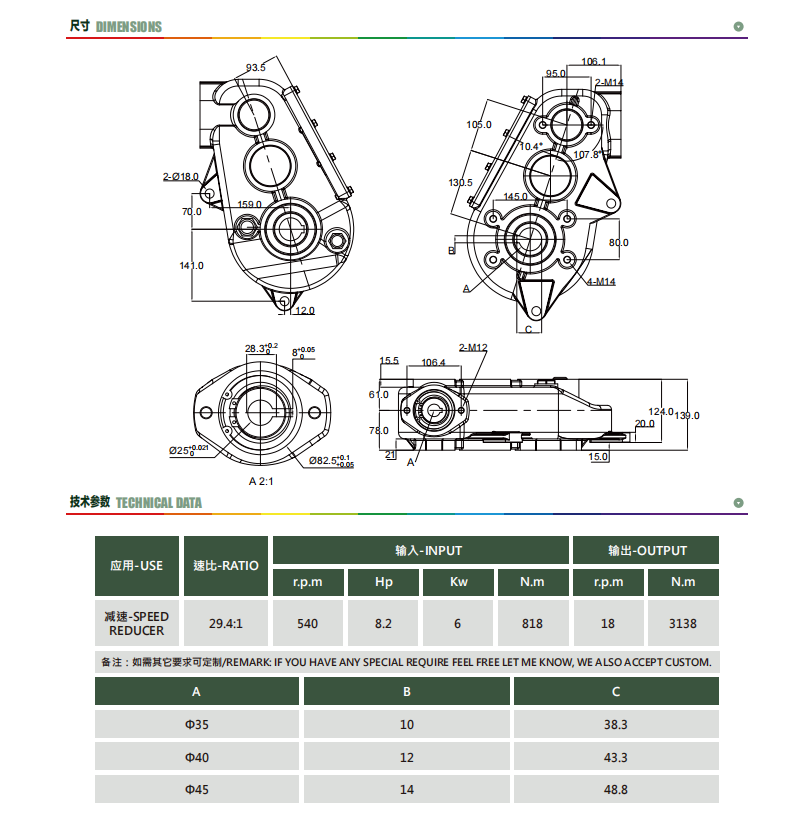
Understanding the internal mechanics highlights why these components are critical for modern agronomy. The gearbox does not merely transfer power; it meticulously regulates it to match the physical demands of the load.
The apron chain dictates the "feed rate" of the machine. The gearbox controls this speed through precise gear ratios. If the chain moves too slowly, the application rate will be too light, requiring multiple passes and burning unnecessary fuel. In contrast, if the chain moves too fast, it overwhelms the beaters.
Modern hydraulic drive gearboxes, such as the KLF-H300 series, integrate directly with hydraulic motors (like BMP/BMR series). This allows the operator to adjust the apron chain speed independently of the tractor's engine RPM. This capability means you can maintain a consistent feed rate whether driving up a steep incline or navigating a flat pasture.
Farmyard waste is rarely a uniform substance. A single farm may spread wet, heavy dairy slurry one week and dry, straw-dense horse bedding the next. These materials exert vastly different physical forces on the machine.
Wet slurry is extremely heavy, demanding maximum torque. Straw-packed manure is lighter but highly intertwined, requiring aggressive, high-speed beater action to tear it apart. A well-engineered gearbox accommodates these variations by maintaining rigid power transfer efficiency. Internally, the gears are cut to precise tolerances to minimize backlash, ensuring the machine does not bog down during material transitions.
The transition from rudimentary spreading to precision agriculture relies heavily on mechanical advancement. Let's look at how drive systems have evolved and why upgrading makes financial sense.
Drive Type | Speed Control | Torque Capacity | Best Application |
|---|---|---|---|
Ground-Driven | Dependent on wheel traction; prone to slipping in mud. | Low. Struggles with heavy, wet loads. | Small hobby farms, dry compost, ATV-towed units. |
PTO-Driven | Consistent with tractor engine RPM. Reliable. | High. Uses mechanical gear reduction for heavy loads. | Mid-sized farms, standard manure types, flat terrain. |
Hydraulic-Driven | Variable and independent of ground speed. Micro-adjustable. | Very High. Excellent shock load absorption. | Commercial operations, precision agriculture, heavy slurry. |
Selecting the appropriate spreader machine components is a critical decision. An undersized gearbox will suffer premature failure due to thermal overload, while an oversized unit wastes capital.
Under 50 Acres (Hobby/Equine): Look for a gearbox rated for 15 to 30 horsepower. Simple PTO bevel gearboxes are usually sufficient here. They prioritize lightweight durability and process dry horse manure effectively.
50-200 Acres (Mid-Size Operations): You need a standard 540 RPM PTO gearbox with heavy-duty spur or bevel gears. Look for enclosed oil-bath lubrication to protect against corrosive ammonia.
200+ Acres (Commercial/Custom Operators): A hydraulic drive gearbox is mandatory. Look for units compatible with 160cc to 315cc hydraulic motors, featuring thick, nodular cast-iron housings. These dissipate heat during 12-hour shifts and handle continuous vibration.
Even the most robust mechanical components require consistent maintenance. The harsh operating environment of manure spreading equipment—characterized by abrasive grit and high moisture—makes proactive maintenance non-negotiable. Getting down in the dirt to inspect your implement now saves thousands of dollars later.
Proper lubrication is your primary defense against friction and thermal breakdown. The gear oil creates a protective film between meshing gear teeth, preventing metal-to-metal contact.
Use the Correct Viscosity: Always adhere to the manufacturer’s specifications. Most heavy-duty agricultural gearboxes require a thick gear oil, such as 80W-90 or ISO VG 220, which maintains viscosity under high operating temperatures.
Scheduled Replacements: Gear oil degrades over time due to thermal cycling. Drain and replace the gear oil annually, or after every 250 to 300 hours of operation. Drain it while the gearbox is slightly warm so suspended contaminants flow out easily.
Inspect Seals and Gaskets: Look closely at the input and output shafts. A leaking seal allows lubricant to escape and provides a pathway for corrosive liquid to enter.
Clear Debris: I’ve seen countless gearboxes destroyed simply because baling twine ruined an output seal. Wire and long pasture grasses frequently wrap around rotating shafts. Remove any tangled material after every use.
Check Bearing Play: Disconnect the power source and manually check the input shaft for excessive lateral movement. Noticeable "play" indicates worn bearings that must be replaced before they cause gear misalignment.
Investing in high-quality drivetrains is a strategic agronomic decision that yields measurable financial returns over the equipment's lifespan.
Accurate spreading ensures that nitrogen, phosphorus, and potassium are distributed evenly. If a failing gearbox causes the machine to drop heavy clumps, excess nitrogen volatilizes into the atmosphere or leaches into groundwater. By contrast, a precision-controlled gearbox maximizes the agronomic value of the manure, directly reducing the volume of expensive synthetic fertilizer you need to buy.
Furthermore, timing in agriculture is everything. Equipment failure during narrow operational windows results in costly delays. The upfront cost of a durable, well-engineered unit is easily offset by the savings gained from avoiding emergency repair bills and idle farmhand labor.
The gearbox acts as the central command for your entire implement, directly ensuring accurate and sustainable nutrient distribution. By regulating power and speed, uniform application keeps your pasture healthy and prevents harmful nutrient burn. Whether you are managing a small equestrian property or a massive commercial dairy, always match the gearbox to your farm size and maintain it rigorously. Proper, proactive maintenance prevents expensive mid-season breakdowns.
Ready to eliminate uneven spreading and upgrade your implement's reliability? Evaluate your current setup and explore professional-grade solutions. Visit Kadiva to find the exact hydraulic or PTO gearbox matched to your operation's heavy-duty demands.
Identifying a failing gearbox early prevents catastrophic damage to your implement. Primary indicators include excessive operational noise, such as grinding, clanking, or high-pitched whining. Visual signs include oil pooling beneath the housing or active leaks around the shaft seals. Mechanically, if you observe inconsistent beater speeds, a sudden lack of torque, or the apron chain jerking rather than advancing smoothly, the internal gears or bearings are compromised.
Yes, depending on the complexity of the gearbox. Modern PTO-driven and hydraulic machines feature multi-speed or variable-speed gearboxes. By shifting the gear ratio or adjusting hydraulic flow, you can increase or decrease the speed of the apron chain independently of the tractor's ground speed. This directly controls the volume of material fed into the beaters.
Ground-driven spreaders utilize the traction of the implement's wheels to turn the internal gearbox. They are mechanically simple but prone to wheel slip in muddy conditions, which halts the spreading process. PTO-driven spreaders connect directly to the tractor's engine via a Power Take-Off shaft, delivering continuous, reliable power regardless of slick field conditions.
The ideal gear ratio depends entirely on the power source and the specific mechanism being driven. For PTO setups, beaters usually require a 1:1.5 to 1:2 reduction to maintain high shredding speeds. Apron chains, however, require massive torque and slow speeds, often utilizing reduction ratios of 50:1 or greater. Hydraulic drive gearboxes offer more flexibility, typically using ratios around 1:3.5 paired with specific hydraulic motor displacements to achieve the perfect torque-to-speed balance.
Yes, many farmers choose to retrofit older implements to gain variable speed control. This typically involves removing the mechanical PTO driveline connected to the apron chain and mounting a compatible hydraulic motor and a dedicated hydraulic gearbox (like the KLF-H300 series) directly to the drive shaft. It requires basic fabrication skills and adequate hydraulic flow from your tractor, but it significantly modernizes the machine's capabilities.
As a standard maintenance practice, check the fluid levels before the start of every spreading season. Most manufacturers recommend draining and replacing the gear oil annually, or after every 250 to 300 hours of active use. Always consult your equipment manual for the exact oil viscosity (usually 80W-90 or ISO VG 220) to maintain optimal performance.
Horses are highly selective grazers with sensitive digestive systems. If manure is applied in thick clumps, it smothers the underlying grass and creates dead patches. Horses will naturally avoid grazing near these piles, reducing the usable area of the pasture. Thick clumps also create ideal breeding grounds for internal parasites. A uniform spread ensures rapid exposure to sunlight and oxygen, speeding up decomposition and promoting healthy grass growth.