
Views: 0 Author: Site Editor Publish Time: 2026-10-14 Origin: Site


Field topography is rarely perfectly flat. When you drag a rigid implement across rutted, rolling terrain, the result is predictable: scalped crops, contaminated forage, and battered machinery. While traditional fixed decks might survive on perfectly leveled ground, they fail miserably when confronted with the realities of modern agricultural landscapes.
As agricultural engineers, we constantly see the aftermath of poor terrain adaptation. A modern forage harvesting setup solves this fundamental mechanical problem through advanced suspension systems. This guide breaks down exactly how floating cutterbars protect your yield and machinery. We will look at the mechanical realities of contour adaptation and outline the essential setup procedures required to keep your equipment running at peak efficiency.
Consistent Cut Protects Crops: Maintaining an optimal blade level prevents severe mechanical trauma to plant crowns. This ensures significantly faster regrowth and higher-quality forage for subsequent harvests.
Adaptation Maximizes Yield: A responsive implement dynamically adjusts to field dips and hills. It successfully captures valuable crop tonnage that rigid decks simply bridge over and leave behind.
Reduces Equipment Wear: Superior suspension prevents the heavy cutterbar from bulldozing into the dirt. This protects critical drive components from torque spikes and extends blade life.
Proper Setup is Non-Negotiable: Systematic maintenance of skid shoes, flotation springs, and hydraulic cylinders is strictly required. A poorly calibrated suspension is no better than a rigid one.
Before diving into the mechanics, we must acknowledge the current economic realities of farming. Recent industry analyses highlight a massive shift away from rigid implements in forage production. With fertilizer, diesel, and land costs at historic highs, precision forage management is now a primary focal point for profitable operations.
Farmers can no longer afford to leave ten percent of their crop in micro-depressions. Furthermore, the demand for high-speed harvesting requires equipment that can absorb terrain shocks without shattering gearboxes. Market trends clearly show a surging demand for advanced hydro-pneumatic suspensions and modular cutterbars. Capturing maximum tonnage while minimizing fuel-burning drag is the new baseline for agricultural profitability.
Contour adaptation is essentially mechanical empathy for your field. Instead of forcing a rigid horizontal plane dictated by the tractor hitch, a specialized implement floats seamlessly over the soil surface. It dynamically adjusts its vertical position in response to the immediate topography.
In modern agricultural machinery, a high-performance disc mower achieves this precise adaptation through independent cutterbar designs, calibrated mechanical springs, or hydraulic suspension circuits. These components work in tandem with heavy-duty skid shoes mounted directly beneath the cutting discs.
Specifically, the skid shoes glide along the earth while the suspension system carries the dead weight of the cutterbar. This clever engineering allows the machine to rise over mounds and dip into shallow valleys with near-zero resistance. By isolating the cutting mechanism from the rigid pitching of the tractor frame, operators guarantee a uniform stubble length. Every blade of grass is sliced cleanly, bridging the gap between mechanical efficiency and agronomic best practices.
Forage harvesting is a critical biological intervention. How you mechanically sever a plant directly dictates its recovery timeline. From an agronomic standpoint, precision cutting is vital.
The crown of a forage plant serves as its biological engine. It stores the essential carbohydrates required to push new shoots. When an implement lacks contouring capabilities, it inevitably scalps the high spots. Imagine cresting a subtle hill, only for a heavy steel deck to shave the earth bare.
Slicing directly into the crown severely depletes these vital energy reserves. In worst-case scenarios, scalping physically destroys the crown tissue. This leads to plant death and a thinning stand. A responsive suspension system systematically prevents this trauma. By floating smoothly over high spots, the machine preserves the structural integrity of the plant.
Maintaining a consistent cutting height leaves adequate residual leaf area. This remaining tissue is absolutely vital for rapid photosynthesis immediately following the harvest. A fast-recovering canopy quickly shades the soil surface. This naturally suppresses the germination of opportunistic weeds that thrive in bare, scalped patches.
Additionally, rigid implements dig into the dirt and introduce substantial amounts of soil into the windrow. This drives up the ash content in your forage. High ash content dilutes digestible nutrients and causes excessive wear on livestock teeth. Floating systems keep the blades elevated, drastically reducing dirt incorporation and ensuring clean, premium feed.
Beyond biological factors, the mechanical capability to follow field contours has a direct impact on your bottom line. Every pound of high-quality forage left uncut represents lost revenue.
Agricultural fields contain micro-topographies like subtle dips, ancient plow furrows, and wheel ruts. A rigid implement operates like a stiff bridge over these depressions. As the tractor wheels ride on higher ground, the rigid deck spans across the dip. This leaves frustrating patches of tall, uncut crop directly beneath it.
Modern farming also requires efficiency, translating to higher operational speeds. Historically, increasing ground speed meant sacrificing cut quality because older implements would bounce violently. Advanced machines utilize responsive hydraulic suspensions that react in fractions of a second. This allows the implement to maintain its contouring ability at speeds between 6 to 10 mph. You boost overall farm efficiency without leaving a ragged stubble behind.
The physical forces exerted on agricultural machinery are immense. Dragging a heavy steel cutterbar across uneven ground generates severe mechanical stress. Let us look at how proper flotation saves your driveline.
One of the most significant field risks is encountering hidden obstacles like large rocks or dense debris. When a rigid machine strikes a rock, the massive kinetic energy of the tractor transfers directly into the cutting assembly. This violent impact shatters discs and bends drive shafts. Responsive suspension acts as a critical shock absorber. Because the cutterbar floats with minimal downward pressure, it rapidly deflects upward upon impact. This terrain following reaction safely dissipates kinetic energy and prevents catastrophic structural failure.
Dragging a heavy deck generates immense ground friction. This parasitic drag forces the tractor PTO to work overtime. It transfers brutal torque spikes, high-frequency vibration, and excessive heat directly through the driveline. By utilizing responsive flotation, you eliminate this dragging effect.
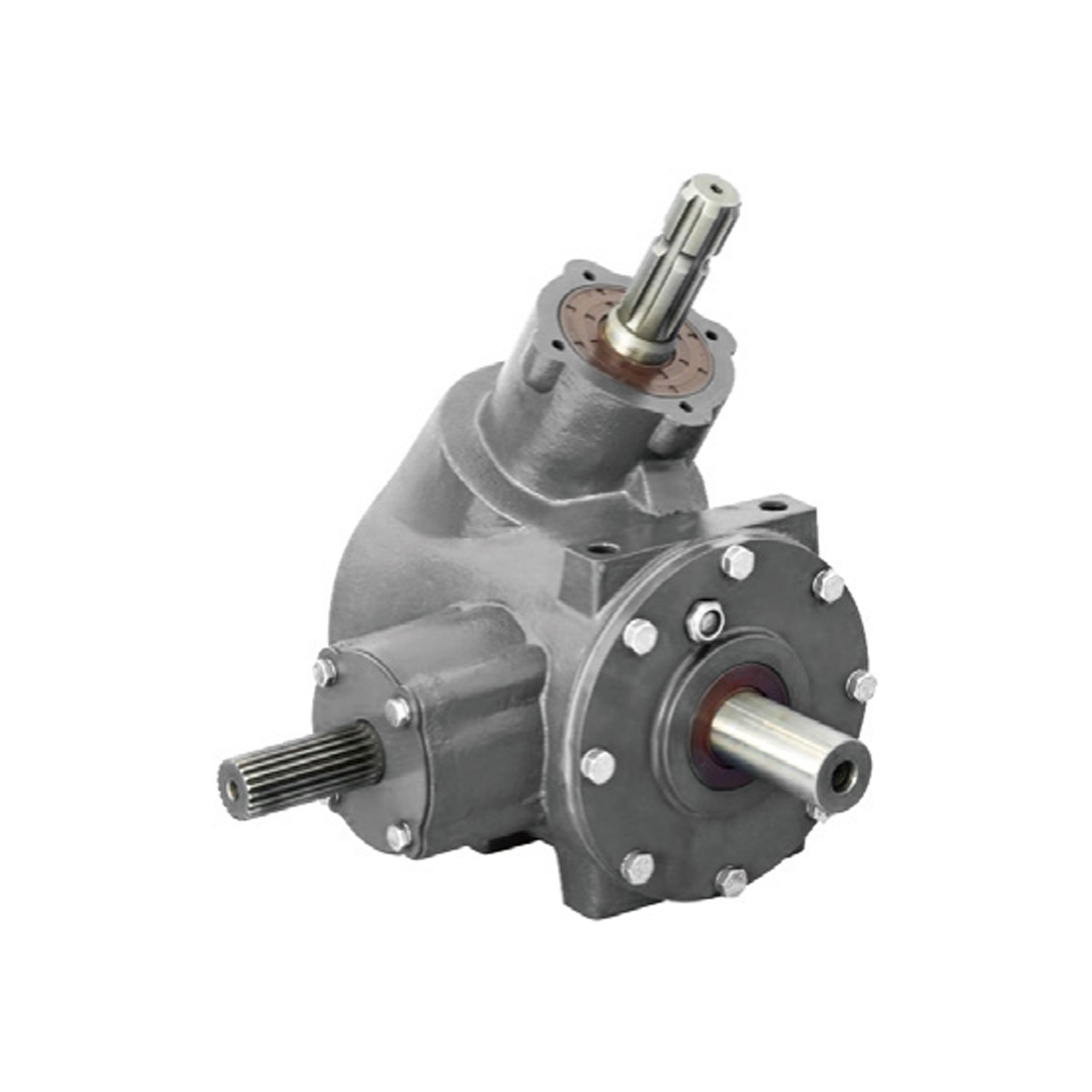
For instance, advanced drive systems like the KLF-GC100 series gearboxes are purpose-built for these dynamic environments. They utilize high-strength nodular cast iron housings and precision-forged alloy steel gears. When the cutterbar floats freely, these internal components stay well within their optimal thermal and mechanical limits. You prevent oil degradation and eliminate the risk of premature gear tooth failure. Furthermore, minimizing direct soil contact drastically extends the lifespan of your cutting knives and bottom skid shoes.
Choosing the right equipment dictates your field efficiency. Many operators debate between traditional rotary cutters and modern multi-disc machines. Understanding their structural differences helps protect your investment.
Rotary cutters are engineered primarily for land clearing and rough pasture clipping. They feature heavy, thick decks and a rigid frame designed to pulverize brush. This rigid design is their biggest limitation in hay production. They do not adapt to ground contours. They scalp hills and bridge valleys, making them highly inefficient for quality forage.
Conversely, a modern multi-disc machine offers a distinct mechanical advantage. The cutterbar is lighter and features a streamlined, low profile. It utilizes an independent suspension system that completely isolates the cutting mechanism from the tractor's pitch and roll. Coupled with specialized skid shoes, it prevents blades from striking the dirt.
Engineering Feature | Rotary Cutter | Modern Disc Machine |
|---|---|---|
Suspension Architecture | Rigid, fixed heavy deck | Independent floating suspension |
Ground Adaptation | Poor; highly prone to scalping | Excellent contour adaptation |
Driveline Stress | High torque spikes on uneven ground | Low; suspension absorbs shock loads |
Primary Application | Brush clearing, rough clipping | High-quality hay and forage harvesting |
Operational Speed | Slow to moderate on rough terrain | Fast; responsive hydraulics allow speed |
Not all machines offer the same level of engineering sophistication. When evaluating equipment, you must meticulously inspect the suspension components. The right features guarantee consistent ground-hugging cutting across varying topographies.
Traditional machines use mechanical spring suspension systems. Large steel springs carry the weight of the cutterbar. While reliable, adjusting them requires physical effort and they possess a linear tension rate. Advanced models feature hydro-pneumatic suspension systems. These use pressurized hydraulic cylinders and nitrogen accumulators. Operators can adjust ground pressure dynamically from the tractor cab. Hydraulic systems react significantly faster to sudden terrain changes.
The physical design of the cutterbar also matters. A low-profile design allows crop to flow smoothly over the gear cases. Premium wide-swath models often feature articulated cutterbars that flex in the center. If one section strikes a steep ridge, the flexibility allows the machine to absorb the impact safely.
Finally, inspect the skid shoes. High-quality mowers feature modular, replaceable skid shoes. Installing thicker shoes raises the baseline elevation, which is ideal for rocky fields requiring taller stubble. Replaceable wear plates are a strict requirement to protect the expensive main gear housing from abrasive soil damage.
Even premium equipment fails if calibrated incorrectly. Proper setup ensures the machine floats gracefully. Regular maintenance keeps the mechanical linkages reacting smoothly.
Incorrect flotation pressure is the most common operator error we encounter in the field. If pressure is too low, the cutterbar drags heavily and scalps the soil. If pressure is too high, the cutterbar bounces erratically and leaves a ragged cut.
To set mechanical springs, park the tractor on a flat concrete surface. Lower the implement to its normal operating position. Adjust the tension bolts on the main springs. Go to the outer edge of the cutterbar and lift it by hand. It should require roughly 50 to 70 pounds of upward lifting force. For hydraulic systems, adjust the cab valve until you achieve this exact same lifting resistance.
The pitch of the cutterbar determines how aggressively the blades address the crop. Adjust this via the tractor's top link. Tilting the unit forward results in a shorter cut but massively increases the risk of rock strikes. On uneven or rocky ground, a flatter or slightly backward angle is highly recommended. This keeps the leading edge of the skid shoes elevated, allowing them to glide over ruts rather than digging into them.
Before the season begins, perform a rigorous mechanical inspection. Check the bottom of the skid shoes for excessive thinning. Replace them before they expose the internal casing. Ensure mechanical springs are not stretched beyond their functional limits. Heavily grease every single pivot point and hinge pin. A dry pin causes the suspension to bind and bounce. Finally, verify that all gear cases are filled with the correct viscosity oil to handle the thermal loads of the harvest season.
Adapting to the unique contours of your fields is an absolute necessity for maximizing crop yield and protecting your machinery. By allowing the implement to float seamlessly over uneven terrain, you preserve vital plant health, ensure rapid regrowth, and prevent catastrophic driveline damage.
Investing time in proper suspension calibration pays off immediately. Systematic maintenance ensures fewer breakdowns and guarantees the production of premium, low-ash forage. Ready to upgrade your forage harvesting setup? Do not let rigid equipment dictate your yield. Whether you are building a new implement or upgrading an existing fleet, selecting the right drive components is critical. Explore the high-performance KLF-GC100 series and other precision agricultural drive solutions at https://www.hz-kadiva.com to find the exact match for your demanding field conditions.
The recommended height generally falls between 2 to 4 inches. Alfalfa requires a stubble length of 2 to 3 inches, while native grasses need 3 to 4 inches to protect the crown. Leaving adequate plant tissue ensures rapid photosynthesis and much faster regrowth. A properly calibrated floating implement keeps this height perfectly consistent.
You must physically test the lifting force at the outer edge of the cutterbar while the machine rests on a flat concrete surface. You should be able to lift it slightly by hand, requiring about 50 to 70 pounds of force. If it requires all your strength, it is too heavy. If it lifts with zero effort, it is too light and will bounce.
A stiff or binding suspension prevents the cutterbar from rising over field contours. The machine will act like a rigid deck, bulldozing into high spots. This causes severe crop scalping, introduces massive amounts of dirt into your forage, and transfers dangerous shock loads directly into your gearbox and tractor PTO.
Proper terrain following significantly reduces parasitic drag. When a heavy cutterbar drags through the dirt, ground friction forces the tractor engine and PTO to work much harder, burning more fuel. By floating the cutterbar just above the soil, you eliminate this friction, lowering the continuous torque demand on the PTO and improving overall fuel efficiency.
Yes, most older models feature adjustable mechanical flotation springs. You can tighten these springs to reduce ground pressure. Replacing heavily worn skid shoes also drastically improves glide performance. Most importantly, aggressively lubricating all hinges and pivot points prevents binding and restores smooth movement to aging suspension systems.
Modern implements are engineered to react incredibly quickly to terrain changes. Hydro-pneumatic suspension systems excel at high-speed adaptation, delivering excellent performance at 6 to 10 mph. However, basic physics still apply. Slowing down slightly on extremely rough terrain is always recommended to protect mechanical linkages from severe impact forces.