
Views: 0 Author: Site Editor Publish Time: 2026-09-23 Origin: Site


Imagine standing in the field, watching a heavy-duty hopper loaded with several tons of dense diammonium phosphate. The tractor lurches across uneven terrain as you prepare the soil for the upcoming season. The physical strain on your driveline during this window is brutal. I have seen standard transmissions tear themselves apart under these exact loads. If the transmission components powering your broadcast discs are weak or improperly matched, that heavy base fertilizer will break them down quickly. The result? Costly downtime and erratic nutrient distribution across your acreage.
The beating heart of any broadcast application system is its transmission unit. Selecting the right gearbox ensures consistent spread patterns, prevents catastrophic mechanical failures, and maximizes your operational efficiency. In this engineering guide, we will walk through exactly what it takes to select, calibrate, and maintain the ideal transmission unit for high-stress agricultural demands.
Durability is Non-Negotiable: Processing dense, abrasive materials requires high-torque, heavy-duty transmission units to survive shock loads.
Drive System Selection: Choosing between a mechanical PTO drive and a hydraulic system relies on your tractor's output capabilities and target operating speeds.
Gear Ratios Dictate Performance: Internal gearing controls the rotational velocity of the discs. This fundamentally determines both spread width and application rate.
Maintenance Prevents Downtime: Routine calibration, catch tests, and seasonal gear oil changes drastically extend equipment lifespan.
Cross-Compatibility Matters: Proper selection ensures your new gearbox aligns with current implements while allowing for potential dual-purpose integration.
The transmission unit functions as the central power conversion hub for any broadcast implement. Its primary mechanical job is simple but demanding: take the rotational energy generated by the tractor and transform it into the precise torque and speed needed to drive the spinning discs and internal hopper agitators. Without a robust gearbox, achieving uniform nutrient distribution across a wide swath is virtually impossible.
Materials applied prior to soil turning—such as granular urea, potash, or custom blends—are inherently bulky. When a large hopper is filled to capacity, the static weight and dynamic shifting of dry fertilizer place severe stress on the agitator shafts. A standard, light-duty transmission simply cannot handle these forces. Consequently, successful base fertilizer spreading requires a specialized unit engineered to absorb sudden torque spikes. This is especially true when dense, moisture-caked clumps enter the distribution gate.
Agronomic field studies consistently reveal a harsh truth. Uneven nutrient distribution leads to erratic crop emergence, localized soil toxicity, and wasteful nutrient runoff. A reliable transmission ensures the rotational speed (RPM) of the spreading discs remains steadfast, even when the tractor engine experiences minor RPM drops over rough ground. This mechanical consistency translates directly into an even broadcast pattern, guaranteeing that vital nutrients are uniformly incorporated into the soil profile.
Before diving into mechanical specs, we need to look at where the industry is heading. The agricultural sector is experiencing a massive paradigm shift away from traditional, uniform broadcasting toward highly precise, data-driven application. Industry analysis reveals a surging demand for Variable Rate Application (VRA) technology. Farmers are no longer blanketing fields blindly. Instead, they are utilizing prescription soil maps to apply exact nutrient quantities only where needed.
This trend directly impacts transmission selection. Mechanical PTO units, while reliable, are tied to the tractor's engine speed, making on-the-fly adjustments difficult. As a result, the market is seeing a rapid adoption of advanced hydraulic gearboxes integrated with ISOBUS technology. These smart systems allow onboard computers to automatically adjust disc RPM in real-time based on GPS coordinates. This ensures optimal fertilizer placement, reduces chemical waste, and aligns with modern sustainability initiatives.
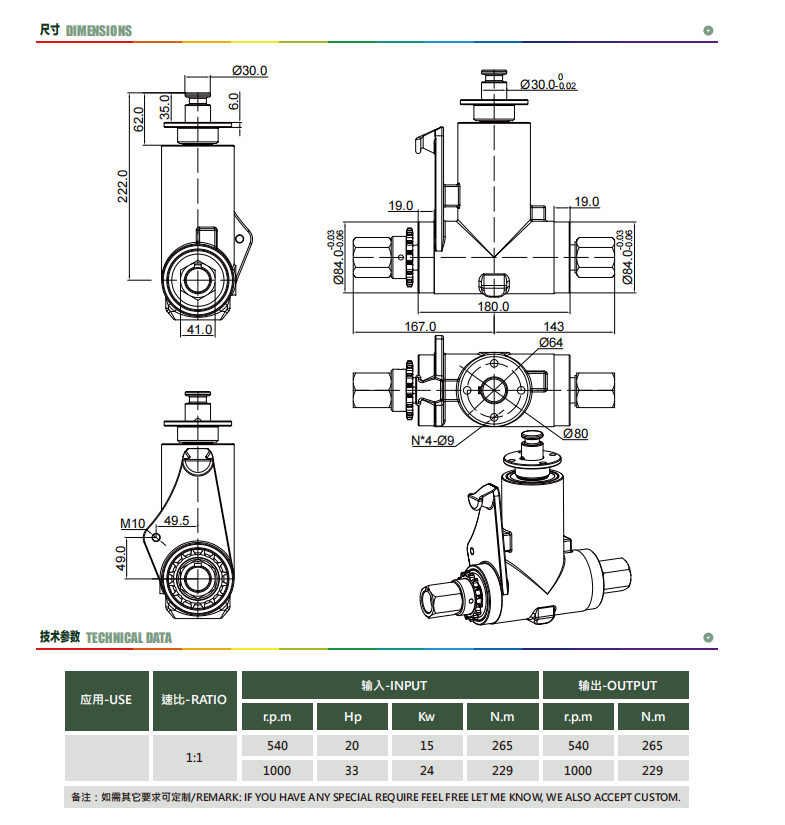
Understanding the internal architecture of these units helps farm managers make informed, data-driven purchasing decisions. High-tier models utilize specific metallurgical choices designed to survive the harsh realities of modern farming.
The outer casing must provide rigid structural integrity while offering absolute environmental protection. Nodular or ductile cast iron remains the industry standard for heavy-duty applications due to its exceptional tensile strength. While aluminum housings reduce implement weight, they are generally inadequate for the sheer mass of base fertilizers. Furthermore, advanced anti-corrosion coatings are non-negotiable. Fertilizers are highly caustic; ambient moisture quickly creates acidic compounds that will rapidly degrade bare metal surfaces.
Beneath the casing, the mechanics typically rely on robust bevel gear sets. For aggressive pre-tillage tasks, these internal components must be forged from premium alloy steel and subjected to precise heat-treatment protocols, such as carburizing. This process hardens the outer gear teeth to withstand continuous friction while maintaining a ductile core to absorb shock impacts. Precision-machined input and output shafts are equally vital to prevent microscopic vibrations that destroy bearings at high speeds.
Interestingly, premature failure is rarely caused by a shattered gear. It is almost always the result of fluid contamination. Premium tapered roller bearings are necessary to manage the intense radial and axial loads generated by the spinning discs. Multi-lip Viton or nitrile oil seals act as the final line of defense. They prevent microscopic, abrasive fertilizer dust and morning dew from bypassing the casing and destroying the lubricating oil.
Power delivery to agricultural implements generally falls into two distinct categories: mechanical drive and fluid power. Selecting the optimal system depends heavily on your farm's operational parameters and existing tractor fleet.
Feature | Mechanical PTO Drive | Hydraulic Drive System |
|---|---|---|
Power Transfer | Direct physical connection to driveline | Fluid flow powering a direct-mount motor |
Speed Control | Fixed to tractor engine RPM (540/1000) | Independent, infinitely variable via cab controls |
Precision Ag Integration | Limited; requires manual gear/gate adjustments | High; seamless ISOBUS and VRA integration |
Maintenance Complexity | Low; basic greasing and oil changes | Medium; requires clean hydraulic fluid and filter checks |
Best Use Case | Flat terrain, standard broadcast, budget-conscious | High-speed spreading, precision mapping, uneven terrain |
If your operation relies on standard broadcast methods over relatively flat terrain, a mechanical PTO fertilizer gearbox remains a steadfast, cost-effective choice. However, if you are covering massive acreage at speeds pushing 20 mph, investing in a hydraulically driven system is the logical path forward.
Procuring a replacement or upgrading your current setup requires a strict evaluation of technical specifications. Failing to match the transmission to the specific demands of the implement will inevitably result in sheared shafts. Let's look at the concrete parameters you need to evaluate.
Torque is the rotational muscle required to spin the discs against the heavy resistance of falling fertilizer. Heavy, damp materials demand a unit with a high continuous torque rating. As a rule of thumb, select a gearbox with a torque rating 20% to 30% higher than your calculated maximum load. Additionally, ensure the horsepower (HP) rating aligns with your tractor. Connecting a 50 HP-rated unit to a 120 HP tractor operating under heavy load is a guaranteed recipe for shattered internal gears.
The internal ratio defines the mathematical relationship between the input shaft speed and the output disc speed. Taking industry-standard units like the KLF-SF11 series as an engineering benchmark, we typically see a 1:1.21 ratio. This acts as a speed multiplier—a standard 540 RPM input will yield roughly 653 RPM at the discs, generating the exact centrifugal force needed for wide, uniform patterns.
Physical compatibility is just as critical when upgrading an agricultural spreader. The input shaft must perfectly mate with your existing driveline. Look for standard profiles, such as the widely used 1-3/8" 6-spline configuration, to ensure a seamless, vibration-free connection.
To optimize capital expenditure, many farm managers seek out multi-purpose implements. Understanding how power transmission components cross over between different tasks can significantly reduce your overall equipment overhead.
A common field question is whether a transmission designed for a fertilizer machine can be utilized for planting cover crops. Mechanically, the answer is yes, provided the torque and RPM parameters align. Broadcasting heavy nutrients demands aggressive, high-torque output. Seeding, conversely, requires delicate, lower-speed metering to ensure fragile seeds are not shattered by centrifugal force. Premium dual-purpose units achieve this balance by offering specific step-down ratios.
When upgrading your fleet, prioritize modular design. Look for units featuring universal 4-bolt square flange mounting patterns. This modularity empowers your maintenance team to seamlessly transfer the transmission from a seeding machine to a broadcast implement during seasonal changeovers, drastically reducing the need to inventory proprietary spare parts.
Procuring an industrial-grade transmission is only half the battle. The implement must be strictly calibrated. Incorrect gate settings or RPM levels will completely negate the mechanical advantages of your new equipment.
The physical trajectory of the granules is dictated by centrifugal force. If the tractor bogs down in soft soil and PTO RPM drops, the output speed decreases. This causes the spread width to narrow, creating heavy bands of toxic fertilizer directly behind the machine. Conversely, excessive RPM can pulverize granular materials into dust, blowing them off-target. Maintaining a steadfast input speed is the cornerstone of pattern uniformity.
To ensure you are hitting exact pounds-per-acre targets, perform a physical catch test before hitting the fields. Engage the drive system and set the tractor throttle to the designated operating speed (typically 540 RPM). Remove the spinner discs, place heavy-duty catch pans directly under the hopper gates, and run the machine for exactly 30 seconds at a baseline gate setting. Weigh the collected material accurately, multiply by your field speed conversion factors, and adjust the hopper gates until the output matches your agronomic target perfectly.
Agricultural environments are unforgiving. The relentless combination of abrasive grit, heavy dynamic loads, and highly corrosive chemicals means that a strict preventative maintenance schedule is your only defense.
Friction is the ultimate enemy of internal gearing. These heavy-duty units rely entirely on a microscopic film of extreme pressure (EP) gear oil—typically 80W-90 or 85W-140—to prevent metal-on-metal contact. Conduct the initial fluid change after the first 50 hours of break-in operation to flush out manufacturing shavings. Subsequently, check fluid levels via the sight glass daily.
Because nutrient blends are highly hygroscopic, they absorb moisture from the air, creating a corrosive paste that eats through rubber seals. After operations conclude, wash the implement thoroughly with low-pressure water. Never aim high-pressure washers directly at the shafts; the intense pressure will force water past the seal lips, contaminating the oil reservoir.
The agricultural components market is flooded with low-cost aftermarket parts. While the upfront savings may look appealing, objective field data proves that prioritizing initial cost over engineering quality inevitably leads to exponential losses in downtime.
Seek out manufacturers who run their units on dynamometers under maximum simulated torque loads. This ensures the heat treatment of the gears and the structural integrity of the cast housing meet rigorous specifications. Transparent testing data is your best guarantee that the equipment will survive the unpredictable realities of field work.
Selecting the ideal transmission unit is a foundational decision that directly impacts the success of your pre-tillage field preparation. By understanding your specific torque requirements, evaluating the benefits of mechanical versus hydraulic drives, and prioritizing heavy-duty components, you safeguard your operation against mid-season breakdowns. Proper calibration and diligent maintenance will further ensure that your fields receive the exact nutrient profile required for maximum yield.
Don't let a weak transmission compromise your harvest. Evaluate your current broadcast equipment today, and explore industrial-grade, precision-engineered solutions tailored to your farm's unique demands. For robust, field-tested transmission units, explore Kadiva's complete range of agricultural gearboxes to find the perfect match for your application.
The optimal ratio is dictated by your specific disc diameter and the target spread width. However, ratios of 1:1 or 1:1.21 are the industry standard for broadcasting heavy base materials. These configurations generate the necessary centrifugal force to achieve a wide, uniform pattern without over-stressing the tractor's engine.
Yes, provided the torque ratings and operating RPM ranges overlap. It is crucial to remember that seeding requires highly precise, gentle, lower-speed metering to protect fragile seeds, whereas broadcasting nutrients requires aggressive, high-torque output. Ensure the unit is rated to handle both operational extremes safely.
Mechanical failures rarely occur without warning. Watch for excessive vibration traveling through the implement chassis, loud grinding or high-pitched whining noises, and visible gear oil weeping around the seals. Furthermore, if you notice distinct banding or inconsistent spread patterns in the field, it may indicate internal gear slippage.
Most heavy-duty agricultural transmissions require high-viscosity, extreme pressure (EP) gear oils, such as 80W-90 or 85W-140, to maintain a protective film under heavy loads. Always consult the specific manufacturer's manual, as modern high-speed hydraulic setups may require advanced synthetic lubricants for proper heat dissipation.
Absolutely. Operating at elevated ground speeds (e.g., above 15-20 mph) while pushing heavy materials dramatically increases internal friction, heat generation, and dynamic torque loads. Under these aggressive conditions, utilizing premium bearings and adhering strictly to shortened synthetic lubrication intervals becomes mandatory to prevent premature failure.
As a best practice, perform the initial break-in oil change after the first 50 hours of operation to remove any microscopic metal shavings from the manufacturing process. After that, perform a complete fluid drain and replacement at the end of every major spreading season, or every 250 to 300 operating hours, whichever comes first.
Overheating is typically caused by three main factors: insufficient or degraded gear oil, operating the implement at speeds far exceeding its rated HP and RPM capacity, or severely worn bearings creating excessive internal friction. If the housing is too hot to touch, stop operations immediately and check the fluid levels and seal integrity.