
Views: 0 Author: Site Editor Publish Time: 2026-10-09 Origin: Site


Weather windows for cutting hay are notoriously tight. For commercial agricultural operations, time literally translates to money. Relying on undersized or outdated cutting equipment inevitably leads to costly bottlenecks. Picture a rapidly approaching storm system while you still have 200 acres of prime alfalfa standing in the field. In these high-stakes moments, machinery limitations can ruin an entire season's profit.
A dedicated high-capacity machine solves these operational hurdles. It drastically reduces fuel costs and prevents crop degradation. In this comprehensive guide, we will explore the most efficient configurations available today. We will help you navigate the complex landscape of heavy-duty forage equipment to maximize your yield in large-scale harvesting operations.
Recent market analyses indicate a definitive shift in commercial agriculture towards automation and wider cutting widths. As rural labor shortages continue to squeeze farm managers, the industry is seeing a massive surge in demand for high-throughput machinery. Operations want one operator to do the work of two. Manufacturers are responding by integrating precision ag technologies directly into forage equipment. This includes GPS auto-steer, yield mapping, and ISOBUS implement controls.
Furthermore, changing climate patterns have made weather windows more unpredictable than ever. A quick look at recent agricultural machinery trends highlights that farms are upgrading to high-speed disc systems simply to outpace sudden rainstorms. Modern drivetrains are being optimized to deliver maximum torque to the cutterbar at lower engine RPMs. This evolution means today's harvesting machinery is not just about raw horsepower. It is about maximizing every drop of diesel and optimizing field logistics.
For large farm enterprises, equipment procurement decisions must be strictly driven by Return on Investment. Relying on pull-type implements that are too small for your acreage often results in prolonged harvest times. It increases soil compaction from extra passes and degrades forage quality. Upgrading your primary cutting implement introduces operational efficiencies that directly impact farm profitability.
Unmatched Cutting Speeds and Capacity
When facing down a field of dense morning-dew-soaked crop, traditional cutting systems frequently struggle. They often bunch up and force the operator to halt completely. In stark contrast, a modern disc system utilizes a series of overlapping high-speed rotating discs equipped with free-swinging blades. This mechanical design creates a continuous aggressive slicing action. It powers through heavy yields without hesitation. Operators can utilize significantly wider headers while maintaining field speeds of 10 to 14 mph.
Improved Crop Quality and Conditioning
Severing the plant from the root is only the first step. Managing internal moisture content is equally critical to the curing process. Modern commercial units seamlessly integrate advanced conditioning systems directly behind the cutterbar. Specifically, this mechanical conditioning breaks the waxy epidermis of the plant. Trapped moisture escapes rapidly into the atmosphere. Faster dry-down times mean the windrow spends less time exposed to potential rain and ground moisture.
When evaluating fleet upgrades, farm managers frequently debate the merits of pull-type trailed implements versus dedicated motorized units. The mathematically correct choice depends heavily on your capital budget, field layout complexity, and labor availability. Let us look at the hard data.
Feature | Pull-Type Trailed Mower | Self-Propelled Disc Mower |
|---|---|---|
Initial Capital Investment | Lower upfront cost | Higher premium investment |
Maneuverability | Limited by wide turning radius | Zero-turn capability provides supreme agility |
Tractor Utilization | Ties up a utility tractor during harvest | Frees up tractors for baling and hauling |
Crop Trampling | High risk on opening field passes | Zero risk due to front-mounted header |
Average Field Speed | 5 to 8 mph | 10 to 14 mph |
For continuous commercial operations, the labor savings and crop preservation generally offset the higher upfront costs within just a few seasons. A purpose-built machine exists for one primary task: cutting forage as rapidly and efficiently as physics allows. Because the header is mounted at the very front of the self-propelled mower, the tires never trample uncut crops. This protects your yield on every single pass.
The term self-propelled encompasses a few different equipment setups in today's market. Understanding the nuances of these mower options will help you perfectly match the machinery to your specific field conditions and operational logistics.
Dedicated Windrowers
These are standalone purpose-built machines featuring their own diesel engine, cab, and hydrostatic drivetrain. They are explicitly designed to carry massive front-mounted headers. Because the entire machine is optimized solely for cutting, they offer the highest transport speeds and advanced hydraulic header controls. They remain the gold standard for massive operations processing thousands of acres annually.
Front-Mount Systems
Pushed by a standard high-horsepower agricultural tractor via a front hitch and Power Take-Off, these units offer a highly efficient alternative. They provide excellent forward visibility and prevent the tractor from trampling uncut crops. When paired with a modern tractor featuring a reversible operating station, they brilliantly mimic the feel of a dedicated unit.
Butterfly Triple Combinations
A butterfly setup involves mounting one mower on the front of a tractor and two on the rear extending outward like wings. This configuration drastically boosts field capacity. It often allows operators to cut swathes of 30 feet or more in a single sweeping pass. Butterfly setups foster incredible utilization of existing high-horsepower tractors.
When evaluating specific models at the dealership, you must look beyond just the cutting width. The underlying engineering details dictate exactly how well the farm mower will perform when conditions deteriorate.
The Power Transmission System
While the spinning blades do the actual cutting, the power transmission system is what makes heavy-duty harvesting possible. The gearbox is responsible for taking the immense rotational power from the engine and transferring it down into the cutterbar. Heavy wet crops and dense undergrowth put immense torsional strain on this component.
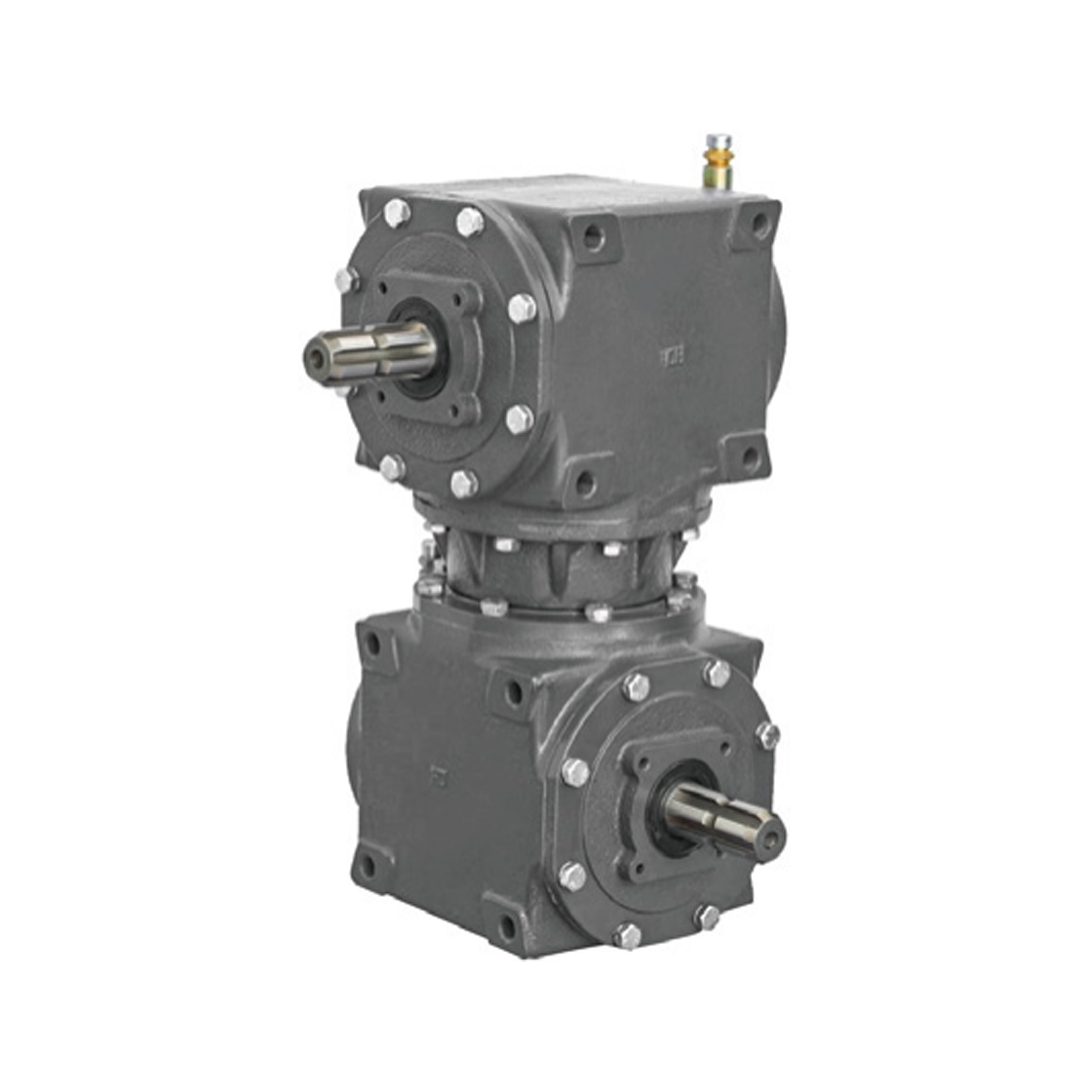
From an engineering perspective, heat dissipation, bearing quality, and gear machining precision are vital. Relying on sub-standard transmission parts will lead to power loss and dangerous driveline vibrations. Eventually, it causes machine breakdown during the most intense periods of the harvest. For example, industry-leading components like the KLF-GC281 Disc Mower Series Gearbox are specifically engineered for these punishing environments. Designed with high-grade nodular cast iron housings, these gearboxes offer superior shock load resistance compared to standard aluminum cases. They effortlessly handle high input speeds of 540 or 1000 RPM, translating power seamlessly through precision-cut bevel gears to maintain optimal disc speed. The integration of premium tapered roller bearings ensures the gearbox can withstand both radial and axial loads generated by heavy crop volumes. Ensuring your machine utilizes a rugged gearbox of this caliber is the absolute backbone of field reliability.
Header Flotation and Suspension
Agricultural fields are rarely perfectly flat. A rigid unforgiving cutterbar will dig into the soil. This instantly dulls blades and introduces ash into the forage, severely lowering feed quality. Look for advanced hydropneumatic or heavy-duty mechanical spring suspension systems. These allow the heavy header to float and independently contour to uneven terrain.
Selecting the right equipment requires a systematic data-driven approach rather than relying on brand loyalty alone. Use this practical framework to guide your next major purchasing decision.
Step 1: Calculate Required Capacity
Start by calculating your required throughput. If you farm 1000 acres of alfalfa and typically have a strict three-day weather window, you must process roughly 333 acres per day. Divide that by your workable daylight hours to determine the exact acres-per-hour capacity you need. This mathematical baseline will definitively dictate the header width and operating speed required.
Step 2: Evaluate Existing Assets
Take a hard inventory of your current tractors. Do you have a 250 horsepower tractor sitting idle during the cutting phase? Investing in a high-capacity butterfly setup might be the most capital-efficient route. Conversely, if all your tractors are actively engaged in baling or hauling during the harvest window, purchasing a dedicated windrower is a logistical necessity.
Step 3: Scrutinize Internal Components
Ask the dealer about the gearbox specifications and driveline protection. A machine with a robust heavy-duty gearbox will outlast cheaper alternatives by thousands of hours. Ensure your chosen brand has a strong local support network capable of providing same-day parts availability for critical wear items.
Investing in the right cutting equipment fundamentally increases farm efficiency. Choosing the proper configuration improves crop quality immensely while reducing labor strain. Always evaluate your specific acreage and existing tractor fleet before making a purchase. Remember that routine maintenance prevents costly delays. Inspect your cutterbar and driveline before every season.
If you are upgrading your agricultural machinery or manufacturing heavy-duty forage equipment, sourcing premium power transmission components is non-negotiable. Explore high-performance agricultural gearboxes and drivetrain solutions at Kadiva to ensure your equipment never falters when the weather window is closing.
Most modern units comfortably operate at ground speeds ranging from 8 to 14 mph. The exact speed depends heavily on field topography, crop density, and moisture levels. Because the overlapping discs slice cleanly through biomass without clogging, these machines maintain high forward speeds without leaving uncut streaks.
Horsepower requirements scale directly with cutting width and conditioning type. Dedicated self-propelled units are equipped with onboard diesel engines typically producing between 150 and 250 horsepower. Pushing a high-capacity triple butterfly setup requires a heavy-duty tractor delivering a minimum of 200 to 250 PTO horsepower.
For most commercial alfalfa operations, the ideal cutting height is between 2.5 and 3 inches. Cutting too low damages the crown of the plant, significantly delaying regrowth and reducing the yield of subsequent cuttings. High-quality flotation systems allow operators to lock in this precise height across uneven terrain.
Preventing gearbox failure comes down to lubrication and vibration monitoring. Always check the gear oil levels daily before operation. Use the exact viscosity recommended by the manufacturer. Additionally, inspect the driveline slip clutches annually. If a disc strikes a hidden rock, a properly functioning slip clutch will disengage power, saving the internal gears from shattering.
No. These are precision agricultural implements specifically engineered for harvesting hay, forage, and soft grasses. The high-speed lightweight blades and the internal gears of the cutterbar are not designed to absorb the massive shock loads generated by striking woody materials. Attempting to clear thick brush will result in shattered blades and severe internal damage.