
Views: 0 Author: Site Editor Publish Time: 2026-07-22 Origin: Site


Harvest windows remain unforgiving, leaving absolutely zero room for equipment failure in the field. During these tight operational timelines, sudden downtime directly equates to immediate crop degradation and substantial lost revenue. Operators simply cannot afford mechanical delays when weather conditions dictate the pace of the harvest.
The central power transmission hub dictates the overall efficiency of your entire pickup and baling process. If it fails, your operation grinds to an agonizing halt while cut crops lose their nutritional value. A high-performing Baler gearbox serves as the indispensable beating heart of this mechanical ecosystem.
You need a practical, specification-driven approach to evaluating, sourcing, and maintaining a replacement or upgraded unit. We will explore how to identify robust materials, ensure proper installation, and execute strict maintenance protocols. By applying these insights, you will possess the precise knowledge required to maximize uptime and secure a seamless, highly productive harvest season.
Performance metrics matter: Gearbox selection must align with tractor PTO speeds (typically 540 or 1000 RPM) and required torque capacities to prevent shear pin failures.
Material selection dictates lifespan: Nodular cast iron housings and precision-forged bevel gears offer superior resistance to high-shock agricultural loads.
Proactive maintenance prevents catastrophic failure: Implementing rigid post-season oil analysis and backlash testing extends gearbox life significantly beyond standard manufacturer estimates.
Installation requires precision: Driveline misalignment during installation is the leading cause of premature input shaft bearing failure.
We must analyze the stark business impact of drivetrain failure during peak harvest periods. Labor costs multiply rapidly when field crews sit idle waiting for repairs. Operators often face expensive rental replacements just to finish the field before rain arrives. Furthermore, compromised forage quality occurs when cut crops sit too long on the ground waiting for baling. Nutritional leaching and moisture damage destroy the feed value. These cascading operational effects underline why a dependable drivetrain matters immensely to your bottom line.
Defining success requires looking far beyond basic operational function. A reliable replacement must deliver sustained torque transfer without experiencing severe overheating. It should maintain exact OEM mounting footprints to guarantee straightforward drop-in fitment. You should also expect minimal mid-season servicing if the unit operates squarely within its designed parameters. A successful component runs quietly, stays cool, and holds its seal integrity through the dustiest conditions.
Industry standards play a major role in establishing baseline equipment reliability. Reputable manufacturers engineer agricultural gears according to strict ISO and AGMA testing standards. These rigorous engineering frameworks ensure baseline safety, load capacity, and metallurgical consistency across production batches. Choosing non-compliant components introduces unnecessary mechanical risk into your high-stakes harvest environment. Always verify certification claims when evaluating unfamiliar manufacturing brands.
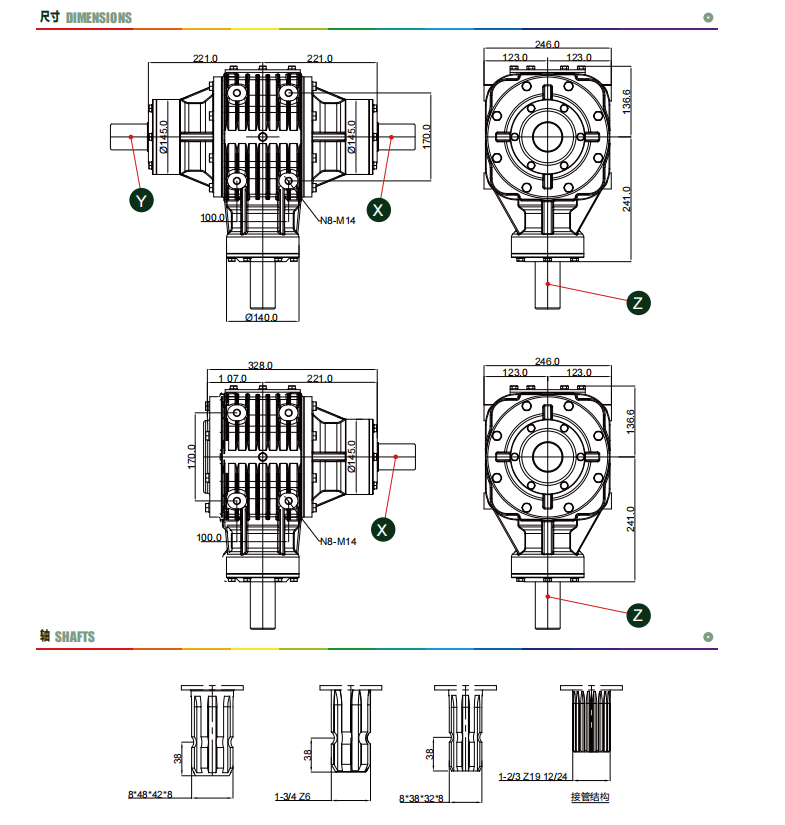
Torque ratings and gear ratios demand your immediate attention during the initial evaluation. You must match the gear ratio precisely to your specific baler chamber size and desired bale density. Incorrect ratios will either lug the tractor engine excessively or fail to compress the crop adequately. Consult your original equipment manual to identify the exact multiplication or reduction ratio required for your implement.
Housing materials dictate thermal management efficiency and long-term structural durability. Nodular cast iron provides exceptionally high impact resistance compared to standard cast options. It flexes slightly under extreme shock loads rather than cracking outright. Excellent heat dissipation capabilities also matter immensely during continuous heavy-duty cycles. Overheated oil degrades rapidly, leading inevitably to premature bearing wear and catastrophic failure.
Material Specification | Impact Resistance Level | Thermal Dissipation Capacity | Ideal Operational Application |
|---|---|---|---|
Nodular Cast Iron | Excellent | High | Heavy-duty, high-shock agricultural baling |
Standard Cast Iron | Moderate | Moderate | Light-duty, uniform load environments |
Machined Aluminum | Low | Very High | Low-torque, weight-sensitive applications |
Internal component engineering determines longevity under immense physical stress. Carburized and hardened bevel gears excel at handling sudden, violent load spikes. These spikes happen constantly when picking up uneven or heavy crop windrows. The carburization process creates a hardened exterior shell while retaining a tough, ductile inner core. This metallurgical balance prevents gear teeth from shattering upon impact.
You must evaluate input and output shaft splines carefully before making any selection. Common variations include standard 1-3/8" 6-spline configurations versus the finer 21-spline setups. Count your current implement splines manually before ordering any replacement unit. A mismatched spline count renders the new component entirely useless upon delivery.
Sealing provides the primary mechanical defense against environmental contamination. Multi-lip seals remain strictly non-negotiable for open-field agricultural environments. They excel at keeping out abrasive chaff, fine field dust, and morning moisture. A compromised seal introduces dirt directly into the precision bearings. This contamination guarantees a rapid, noisy, and highly destructive mechanical failure.
Sourcing a replacement generally splits between direct OEM replacements and specialized aftermarket alternatives. Each purchasing path carries specific benefits and potential operational drawbacks. OEM units guarantee exact dimensional fitment and brand-backed factory warranties. Aftermarket solutions often provide upgraded specifications or reinforced materials at a significantly more competitive price point.
Assess carefully when paying the OEM premium actually makes sense for your operation. If your implement remains under an active factory warranty, OEM parts prevent coverage disputes. However, a reputable aftermarket Baler gearbox often delivers equivalent specifications at a notably better return on investment. Older equipment often benefits heavily from aftermarket innovations introduced long after the original baler rolled off the assembly line.
Sourcing Option | Initial Capital Cost | Fitment Guarantee | Performance Potential |
|---|---|---|---|
Direct OEM | Premium (Highest) | 100% Exact Match | Standard Factory Specifications |
Premium Aftermarket | Moderate | Requires Verification | Often Exceeds OEM Specifications |
Economy Aftermarket | Low | Highly Variable | Prone to Early Mechanical Failure |
Follow strict shortlisting logic when evaluating potential component vendors. You must verify dimensional equivalence meticulously to avoid installation headaches.
Check exact bolt patterns against your existing steel mounting plate.
Measure input and output shaft lengths down to the nearest millimeter.
Confirm PTO horsepower ratings match your specific tractor and implement combination.
Evaluate vendor trustworthiness by testing their technical support responsiveness prior to purchase.
Demand full transparency regarding warranty terms, exclusions, and return policies.
A reputable supplier will gladly provide detailed engineering drawings upon request. They should answer technical questions regarding bearing types and seal materials without hesitation. Walk away from vendors unwilling to supply basic performance data.
Pre-installation verification sets the foundational stage for long-term operational success. Always inspect the new unit for hidden shipping damage immediately upon arrival. Check the factory oil fill levels before turning the input shaft. Never assume a newly delivered unit arrives pre-filled to operational capacity. Running a dry or under-filled casing will destroy internal gears within a few agonizing minutes.
Driveline alignment represents the absolute core installation risk you face. Minor misalignments between the PTO shaft, universal joints, and the input shaft cause massive problems. These misalignments generate severe parasitic vibration throughout the entire drivetrain architecture. This constant, rhythmic vibration leads directly to early bearing death and eventual housing fractures.
Mounting protocols demand absolute rigidity and strict attention to detail. Agricultural implements produce violent vibrations during standard field operation. Follow these best practices closely to secure your hardware:
Use only high-grade, properly rated mounting hardware designed for heavy machinery.
Apply an appropriate thread-locking compound to prevent nuts from vibrating loose.
Clean the mounting surface completely flat to prevent housing distortion when tightening bolts.
Tighten all bolts using a calibrated torque wrench following an alternating star pattern.
Break-in procedures finalize the entire installation process. Run the implement empty at low initial operating speeds to distribute oil fully across all internal surfaces. Monitor the external housing temperature by hand during the first fifteen minutes. Plan for a rapid first-service oil change interval immediately following the break-in period. Draining the fluid after the first 50 hours flushes out inevitable manufacturing debris and initial wear particles.
Proactive maintenance keeps your harvest equipment running smoothly season after season. End-of-season protocols dictate the ultimate lifespan of your critical drivetrain components. Tear-down check-ups should always include cleaning the external housing thoroughly. A thick layer of dirt and grease acts as an unyielding insulator, trapping dangerous heat inside the metal casing. Inspect all housing breathers for severe clogs. Blocked breathers blow out input seals by trapping expanding air pressure inside the unit.
Testing gear backlash and shaft end-play allows you to monitor internal wear accurately. Excessive rotational movement indicates worn precision bearings or dangerously thinning gear teeth. Using a simple dial indicator provides measurable data you can track annually. Catching this play early prevents catastrophic tooth failure in the middle of a hot field.
Lubrication management remains your best possible defense against destructive friction. Navigate oil viscosity grades carefully based on your local climate. Many operators debate choosing between standard 80W-90 and synthetic 75W-90 formulations. Always base your selection on anticipated operational temperatures and specific OEM guidelines. Synthetic fluids generally offer superior thermal stability during brutal afternoon heat waves.
Reading oil conditions provides an incredibly accurate window into internal mechanical health.
Milky oil appearance: Signals rapid water ingress, usually resulting from aggressive pressure washing or failed external seals.
Metallic flakes present: Indicates aggressive gear wear or impending catastrophic bearing failure.
Distinct burnt odor: Reveals severe operational overheating and complete fluid chemical breakdown.
Troubleshooting common warning signs requires a well-trained ear and vigilant observation. Diagnosing excessive heat generation usually points to overfilling the oil or extreme internal friction. Whining or grinding noises under heavy load suggest incorrect backlash settings or pitted roller bearings. Input shaft seal weeping often serves as the very first visible indicator of internal pressure buildup or excessive shaft play.
Integrating a rigid, scheduled maintenance routine eliminates unexpected mid-season surprises. Keep detailed logs of fluid changes, torque checks, and any abnormal operational noises. A well-maintained Baler gearbox rewards this diligence with years of flawless, heavy-duty service.
A high-quality drivetrain component represents a highly critical investment in your harvest uptime. It should never be viewed merely as just another standard replacement part. Your entire operation relies heavily on its ability to transmit power efficiently and reliably under immense physical stress. We have explored the necessity of matching torque ratings, evaluating housing materials, and verifying dimensional equivalence.
Rigorous adherence to strict mounting protocols dictates the ultimate return on your machinery investment. Comprehensive post-season maintenance further guarantees your equipment remains ready for the next rigorous harvest cycle. You protect your valuable crop yields directly when you actively protect your machinery.
Take immediate action today to inspect your current setup and prepare for a flawless season. Always consult your specific equipment manual for exact physical specification requirements. Contact a specialized technical sales representative to verify complex fitment questions and torque ratings before finalizing your vital purchase.
A: Look for distinct warning signs like excessive housing heat, heavy clunking under PTO load, or severe shaft play. Finding visible metal shavings in your drained oil provides undeniable proof of internal damage. Input seal weeping also indicates failing bearings or dangerous pressure buildup.
A: Most units rely heavily on EP (Extreme Pressure) gear oils like 80W-90 or synthetic 75W-90. Always subject this choice to your specific OEM manual, as internal tolerances dictate the required viscosity and additive packages needed for protection.
A: Yes, many aftermarket units offer 1:1 compatibility. You must rigorously cross-reference original OEM part numbers, verify exact input/output spline counts, and confirm mounting bolt patterns to ensure a flawless drop-in installation.
A: Standard agricultural benchmarks require a fluid change after the first 50 hours of a new installation to flush manufacturing debris. Afterward, replace the oil annually before the season begins or every 500 to 1000 bales, depending on operating conditions.