
Views: 0 Author: Site Editor Publish Time: 2026-10-05 Origin: Site


Are you losing crops to unpredictable weather changes? Outdated cutting equipment slows down operations. It inflates labor costs and leaves your yield vulnerable to the elements. Recent agricultural industry trends reveal a massive shift toward high-capacity harvesting machinery. Global agricultural data indicates that optimal harvest weather windows have shrunk significantly over the past decade. Erratic climate patterns cause sudden rainfalls. Shrinking rural labor pools add to the operational pressure. Consequently, commercial farms must prioritize machinery that maximizes acreage per hour. In this rapidly evolving landscape, adopting advanced rotary systems is a baseline requirement for commercial survival.
A modern forage cutter maximizes efficiency and protects your bottom line. In this post, you will learn exactly how these machines work and the mechanical advantages they offer. We will compare various options to help you improve large-scale harvesting operations and secure a more profitable season.
Key Takeaways
Unmatched Speed: High-speed rotating discs slice through thick, wet, and tangled crops without clogging. This drastically reduces field time.
Superior Crop Quality: Clean cuts promote faster plant regrowth. They also preserve the delicate nutritional value of the forage.
Smart Comparisons: Precision rotary mowers offer the most favorable return on investment for high-yield agriculture compared to older alternatives.
Mechanical Reliability: Equipment efficiency relies heavily on internal drivetrain components. High-quality power-transmitting gearboxes minimize downtime during critical weather windows.
To fully grasp how modern rotary equipment transforms agricultural operations, we must examine its underlying engineering. Traditional sickle-bar systems rely on a slow, back-and-forth shearing action. Advanced cutters utilize continuous rotary motion instead. This fundamental mechanical difference serves as the primary driver behind their exceptional field performance.
A standard commercial unit features a low-profile cutter bar equipped with multiple heavy-duty discs. Powered by the tractor Power Take-Off, these components spin at incredibly high speeds. Field tests show these discs frequently exceed 2,500 to 3,000 Revolutions Per Minute. Free-swinging steel knives are attached to the outer edges of these rotating hubs.
The blades rely on high-velocity impact rather than a shearing action against a stationary guard. Therefore, they slice cleanly through thick plant stems. Picture a dense, dew-soaked morning field. Instead of dismounting the tractor every twenty minutes to pull tangled fescue out of a jammed cutter bar, this machinery powers through dense vegetation seamlessly. This direct, uninterrupted action significantly boosts your overall harvest speed.
Agricultural environments are rarely perfectly flat or dry. Specifically, the low profile of the cutter bar allows it to glide smoothly over uneven ground. It closely follows the contours of the field. This precise ground-tracking ensures a uniform cutting height. A uniform height is vital for preventing soil contamination during subsequent raking and baling processes.
Furthermore, these machines excel in challenging moisture conditions. Early-morning dew or heavy, wet forage can quickly bring older implements to a standstill. However, the high-speed rotary action creates a strong updraft. This airflow lifts heavy, wet grass, allowing the knives to slice through it efficiently. Operators do not need to wait until the afternoon sun completely dries the field. This mechanical advantage effectively expands the daily operational window.
Selecting the correct cutting equipment represents a critical financial decision for any farm manager. To address the specific needs of commercial operations, it is important to objectively compare available agricultural cutters based on field performance and mechanical design.
Feature | Precision Rotary Cutters | Drum Mowers | Rotary Brush Hogs |
|---|---|---|---|
Primary Use | High-speed forage harvesting | Rough terrain with heavy debris | Pasture clearing and saplings |
Cutting Action | Clean surgical slice | Heavy impact cut | Blunt smashing and tearing |
Tractor HP Needed | Moderate to High | Very High | Low to Moderate |
Crop Regrowth Impact | Excellent | Good | Poor |
Both systems utilize rotary cutting actions, but their structural designs differ significantly. Drum mowers feature two to four large rotating cylinders with blades attached to the bottom. They are incredibly durable and perform exceptionally well on rough, debris-filled terrain.
In contrast, drum mowers are exceptionally heavy. They require substantial tractor horsepower to operate effectively. Lighter rotary disc alternatives feature a wider cutting width relative to their overall weight. This wider swath and lower weight translate to faster forward speeds and reduced soil compaction. This makes them the superior choice where acreage-per-hour is the primary metric.
A common point of confusion among new equipment buyers is the difference between specialized forage equipment and a standard rotary cutter, often referred to as a brush hog. Brush hogs are designed for rough property maintenance. They clear thick saplings and rough pastures. They utilize heavy, blunt blades designed to smash vegetation.
While highly effective for clearing overgrown land, tearing plant stems is detrimental to forage crops. It damages the plant crown and drastically slows down regrowth. Precision agricultural tools are engineered to deliver a surgical cut. This preserves the integrity of the crop and maximizes yield quality.
Operations focused heavily on forage production often upgrade to mower conditioners. This setup features an integrated conditioning unit mounted directly behind the cutter bar. It uses either steel flails or rubber crimping rollers. As the crop is cut at high speed, the conditioner crimps the stems. This breaks the waxy outer layer. Consequently, moisture escapes rapidly, accelerating the field drying process and reducing weather risk.
Investing in modern agricultural machinery must yield measurable returns. For commercial farms, implementing advanced cutting systems provides several quantifiable operational benefits that directly impact profitability.
Labor remains one of the most significant variable expenses in modern farming. Modern equipment can operate efficiently at speeds of 8 to 14 mph, depending on field conditions and tractor horsepower. Operators cover substantially more acres per hour compared to using legacy equipment. Cutting a 100-acre field that once took two grueling days can often be completed in a single afternoon. This drastic reduction in cutting time directly lowers hourly labor costs. It frees up farm personnel to focus on raking, tedding, and baling.
The agronomic impact of the cutting mechanism cannot be overstated. A clean, sharp slice preserves the structural integrity of the plant crown. Crops like alfalfa, bermudagrass, or orchard grass can be shattered by dull or improper equipment. When this happens, the plant expends excessive energy repairing the damage before it can generate new growth.
A precise cut allows the plant to recover immediately. Field studies consistently demonstrate that clean cuts lead to faster canopy closure and quicker regrowth cycles. This rapid recovery often enables farmers to squeeze an additional cutting into the harvest season. This directly maximizes the annual yield.
Despite their high-speed operation, modern cutters are engineered for aerodynamic and mechanical efficiency. The continuous rotary motion creates far less drag on the tractor Power Take-Off compared to the heavy start-stop kinetic energy required by sickle bars. Operating with less mechanical resistance means the tractor engine does not have to work as hard. This results in noticeably lower fuel consumption per acre over the course of a season.
The ultimate goal of forage production is not merely cutting grass quickly. It is producing high-quality, nutrient-dense feed. The speed at which a crop is harvested directly correlates with its final market value.
Forage production is fundamentally a race against meteorology. Once the crop reaches its peak nutritional maturity, it must be cut, dried, and baled before rain can degrade its quality. Rain on cut forage leaches out soluble carbohydrates and proteins. This leads to mold growth and massive value loss.
The primary advantage of high-capacity equipment is its ability to shrink the cutting phase. By maximizing forward speed, farmers can confidently knock down large acreages within tight, 48-to-72-hour sunny weather windows. This operational agility is critical for risk management.
Beyond simply beating the rain, the mechanics of the cut influence the entire drying process. A precise machine lays the cut forage down in a wide, even swath. This uniform distribution exposes a larger surface area of the crop to sunlight and wind. It promotes consistent and rapid drying.
Faster drying locks in the delicate leaf structure. The vast majority of the plant protein and relative feed value reside in these leaves. This is a critical factor for successful hay harvesting. Slow drying or uneven swaths require aggressive mechanical manipulation later. This causes nutrient-rich leaves to shatter and fall to the soil.
While the rotating discs and sharp knives interact directly with the crop, the internal drivetrain is the unsung hero of the machine. The extreme operational demands and continuous high-speed action place immense torque and stress on internal mechanics.
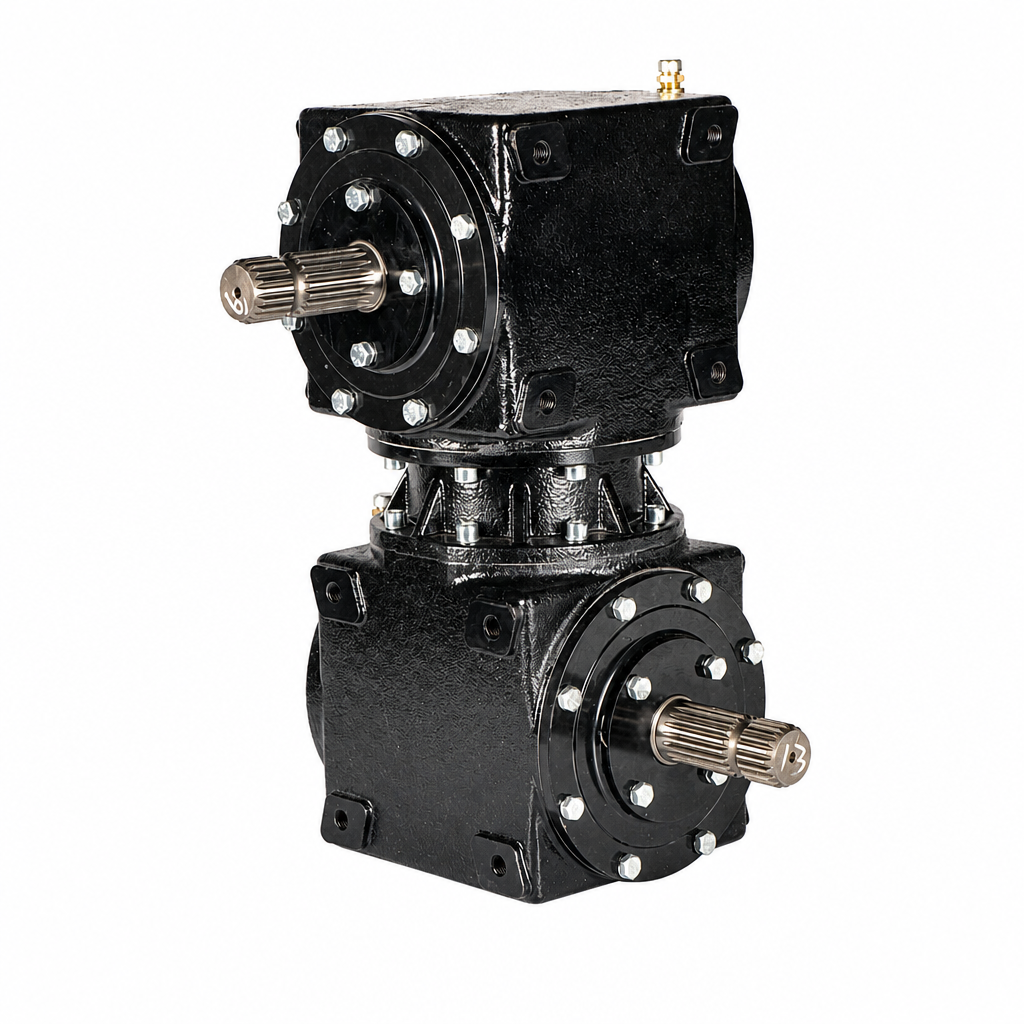
The process begins at the tractor Power Take-Off, but the energy must be smoothly and continuously transferred down to the cutter bar. This heavy lifting is the responsibility of the primary gearbox. High-performance models feature precision-machined bevel gears and specific gear ratios, such as 1:2.83 or 1:3.2. The gearbox alters the angle of the power drive and multiplies the rotational speed. This achieves the necessary RPMs at the cutting discs.
If the power transmission is inefficient or slipping, the discs will lose momentum when encountering thick patches of crop. This loss of RPMs leads to ragged cuts, shattered plant stems, and unsightly streaks of uncut grass left in the field.
Mechanical reliability is non-negotiable in commercial agriculture. A gearbox failure in the middle of a prime weather window can halt operations entirely. You risk thousands of dollars in weather-damaged crops while waiting for replacement parts. Internal gears must be manufactured from hardened steel, such as 20CrMnTi. They should be housed in robust, nodular cast iron casings to prevent contamination from field dust and plant debris.
To ensure continuous operation during peak season, upgrading to a heavy-duty disc mower gearbox designed for 540 or 1000 RPM inputs helps maintain optimal performance. It prevents catastrophic mechanical failures in the field. Properly maintaining this core component guarantees that power from the tractor is efficiently translated into cutting force. This directly protects your farm bottom line.
Even the most advanced agricultural machinery requires rigorous maintenance to sustain peak performance year after year. Implementing a strict maintenance protocol reduces wear and tear. It significantly extends the operational lifespan of the equipment.
Before the tractor ever enters the field, operators should conduct a thorough visual and physical inspection. The high-speed rotary action means that even minor imbalances can cause severe vibrations. This leads to structural fatigue.
Blade Sharpness: Dull knives tear the crop and increase fuel consumption. Inspect blades daily. Flip or replace them as soon as the edges become rounded.
Hardware Checks: Ensure all knives and retaining bolts are securely fastened. A missing blade creates a severe imbalance in the cutter bar.
Debris Clearance: Remove any twine, wire, or heavy debris wrapped around the discs or splined shafts. This prevents friction and seal damage.
Proper lubrication is the lifeblood of high-speed mechanical components. The gears inside the cutter bar and the main drive unit operate under extreme pressure and heat.
Fluid Levels: Routinely check the oil levels in both the main gearbox and the cutter bar bed. When checking the cutter bar fluid, inspect the magnetic drain plug closely. Excessive metal shavings indicate internal gear wear.
Greasing: Apply high-quality agricultural grease to all Power Take-Off shafts, U-joints, and pivot points. Follow the manufacturer specific hourly interval recommendations closely.
Tensioning: Inspect all drive belts and chains for proper tension and alignment. This ensures complete power transfer without slipping.
How an implement is treated during the off-season directly impacts its reliability the following spring. When the season concludes, wash the machine thoroughly. Remove corrosive plant sap and dirt, which can degrade rubber seals. Touch up any chipped paint to prevent rust. Store the equipment in a dry shed or barn. Relieve tension on drive belts to prevent them from stretching during the winter months.
Transitioning from legacy equipment to modern rotary technology requires a notable capital expenditure. However, commercial farm managers must evaluate this purchase through the lens of Return on Investment rather than just the initial sticker price.
Consider a hypothetical breakdown. If a farm currently spends 100 hours per season cutting forage with older technology, and advanced machinery reduces that harvest time by 35 percent, the farm reclaims 35 hours of labor and tractor operation. When factoring in the hourly cost of labor, tractor depreciation, and fuel consumption, the operational savings begin to offset the purchase price immediately. Furthermore, the ability to harvest faster often results in higher-quality feed. This commands a premium price per ton in the livestock market.
Agricultural equipment is a major asset. High-quality implements, particularly those equipped with heavy-duty gearboxes and robust cutter bars, are built to last for thousands of acres. Because they are highly sought after in the secondary market, well-maintained units retain a significant portion of their value. This strong resale value makes them a structurally safe long-term investment for operations looking to scale their capabilities.
Replacing outdated equipment with modern rotary technology drastically improves operational efficiency and forage quality. In commercial farming, time is money. Reliable machinery ensures a highly profitable season. Evaluate your current harvesting setup, and inspect your gearboxes and blades before the season starts. If your drivetrain components are showing signs of wear, explore high-quality replacement solutions at Kadiva to upgrade your system and maximize your yields.
Depending on the tractor horsepower, terrain, and crop density, most modern units can comfortably operate at speeds of 8 to 14 mph. This is significantly faster than traditional sickle bar mowers, which typically max out around 5 mph. The high rotational speed of the cutting discs allows for this rapid forward momentum without compromising the quality of the cut.
While both utilize rotary motion, their applications are completely different. A rotary cutter features heavy, thick blades designed for smashing through heavy brush, saplings, and rough pasture maintenance. A precision forage mower is specifically engineered for clean, fast harvesting. It uses small, razor-sharp knives that slice forage cleanly to promote rapid regrowth and preserve nutritional value.
While they require a steady Power Take-Off speed to maintain blade RPM, these implements are generally highly efficient regarding power consumption. Because they slice cleanly rather than tearing, they create less drag on the tractor. However, the exact horsepower requirement depends on the cutting width. Larger models designed for commercial acreage will naturally require heavier, higher-horsepower tractors to maintain stability and power transfer.
Streaking is a common issue that is usually mechanical in nature. It is most often caused by dull blades, missing knives, or an incorrect Power Take-Off speed that prevents the discs from reaching the necessary RPMs. Additionally, an issue with power transfer from the internal gearbox can cause a drop in rotational speed. Regular maintenance checks and ensuring your tractor is running at the correct output can easily eliminate this issue.
Yes, they excel in these conditions. Unlike older sickle mowers that rely on a shearing action against a ledger plate, which easily clogs with damp material, the high-speed rotary action allows the implement to slice through wet, heavy, and tangled forage with ease. This capability allows farmers to start cutting earlier in the morning when dew is still on the ground, maintaining high operational efficiency in less-than-ideal conditions.
It depends on the cutting width and the specific gearbox configuration. Generally, a commercial-grade unit requires a tractor with at least 70 to 100 Power Take-Off horsepower. This ensures stable power transfer and forward speed without bogging down the engine in dense crops.
Field engineers recommend checking the fluid levels daily before operation. A complete oil change should occur after the first 50 hours of use for a new unit, and then every 250 hours or annually thereafter. Always inspect the magnetic drain plug for metal debris during these routine checks to catch gear wear early.